
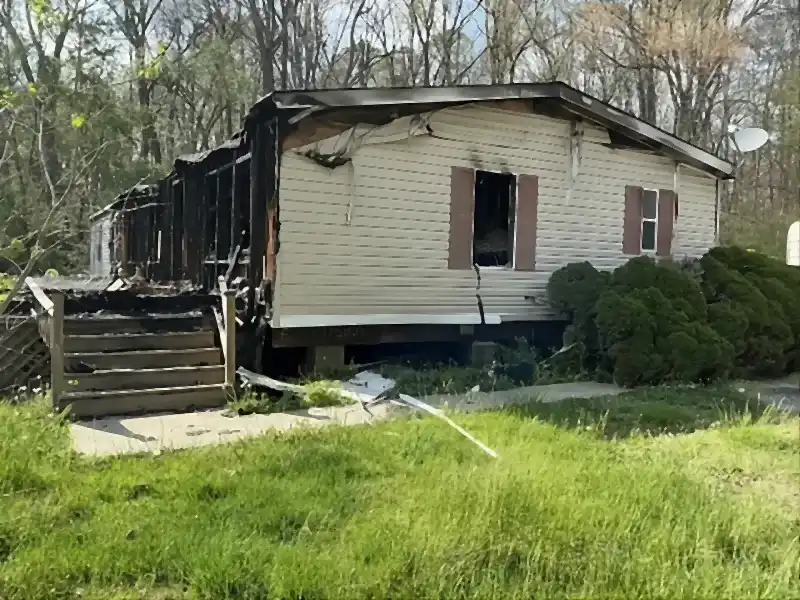
Tearing down a house is faster, cheaper, and more straightforward than most people expect — if you know the steps. The residential demolition process follows a clear sequence: inspection, permits, utility disconnects, mechanical teardown, and debris hauling. Most single-family homes in East Tennessee are fully demolished and site-cleaned within one to three weeks from the first call to a cleared lot. Here’s exactly what that looks like.
Why Homeowners Choose Demolition Over Renovation
The decision to tear down rather than remodel comes down to math and structure. The industry standard is the 50% rule: when repair costs approach or exceed 50% of a home’s current market value, demolition and new construction is almost always the smarter financial path. The same applies when a home has foundation failure, extensive rot or mold throughout the framing, or has been condemned by local code enforcement.
We run into this scenario regularly in McMinn and Polk County. A homeowner will call about remodeling a farmhouse, and once we’re on site, it’s clear the structure has been compromised — sometimes by years of water intrusion, sometimes by settling that’s shifted the foundation beyond repair. Renovating on top of a failing structure doesn’t solve the problem; it delays and amplifies it. That’s the moment the conversation shifts from remodel to demo.
Did You Know?Homes built before 1978 may contain lead paint, and homes built before 1980 may contain asbestos-containing materials. In Tennessee, structures over 50 years old often require an environmental inspection before a demolition permit can be issued — a step that can catch costly surprises early.
The Residential Demolition Process, Step by Step
How does house demolition work?The process begins with a site assessment and ends with a graded, cleared lot. In between, there are five distinct phases every homeowner should understand.
Step 1: Site assessment and hazardous material inspection
Before any equipment rolls in, a qualified contractor walks the property to assess the structure’s size, materials, and access. For homes built before 1980, that includes checking for asbestos in insulation, floor tiles, and roofing. For homes built before 1978, lead paint is a key concern. If hazardous materials are found, abatement must happen before demolition begins. Skipping it isn’t an option: Tennessee’s environmental rules and the EPA’s asbestos rules for demolition projects both apply.
Step 2: Permits and utility disconnects
A demolition permit is required for all full residential teardowns in Tennessee. The permit application goes to your local building or code enforcement department. For projects within the City of Athens, that’s the Athens City Code Enforcement office at 815 North Jackson Street. For unincorporated McMinn County, contact the county code enforcement office. Polk County projects are handled through the Polk County building department in Benton, the county seat. You’ll need proof of ownership, utility disconnect confirmation letters, and in some cases an asbestos survey for older structures.
Utility disconnects must happen before the permit is issued and before any machinery touches the structure. That means coordinating separately with your electric provider, gas company, municipal water and sewer (or your septic contractor if on a private system), and any telecom lines. You’ll also need to contact Tennessee 811 to have underground utilities marked — state law (TCA 65-31-101) requires a minimum of three full working days’ notice before any excavation or demolition begins.
Pro Tip: Start utility disconnect requests early. Electric and gas companies run on their own scheduling timelines, and delays here are the single most common reason demo projects slip. Ourpermits and utility disconnect coordinationis built into every job.
Step 3: Mechanical demolition
Once permits are in hand and utilities are capped, the physical teardown begins. For most residential structures, this means an excavator. The operator starts at the roof and works systematically down through the walls and foundation, controlling where material falls to keep the site safe. A standard single-family home in this region typically comes down in one to two days of active machine work.
Mechanical demolition is much faster and cheaper than selective deconstruction, which means hand-removing materials for salvage. According toAngi’s 2026 house demolition cost data, full residential demolition runs roughly $4 to $17 per square foot nationally. Most East Tennessee projects land in the lower half of that range thanks to lower labor costs and rural lot access.
Did You Know?Wood-frame homes are the least expensive to demolish because wood crushes quickly and hauls cleanly. Brick, stone, and concrete structures require heavier equipment and more time — and those material differences show up directly in your quote.
Step 4: Debris sorting and hauling
Not everything that comes off a demo site goes to the same place. Concrete, metal, clean wood, and drywall are typically sorted and hauled to different facilities — some materials can be recycled or repurposed, which reduces disposal fees. Hazardous materials like asbestos-containing debris must go to a licensed disposal facility under documented chain of custody.
R&G handles all sorting, loading, and hauling as part of ourfull residential demolition service. We don’t leave clients with a pile of rubble to figure out.
Step 5: Final grading and site prep
Once debris is removed, the lot is graded to a level, stable surface. This step matters more than most homeowners realize. Improper grading creates drainage problems, erosion, and complications for the foundation of whatever gets built next. If the demolished home had a basement or a deep concrete footer, that material needs to be removed or properly filled and compacted.
A well-graded lot is a build-ready lot. If the property also has overgrown brush or tree cover around the old footprint, ourland clearing and forestry mulching crewscan open the whole parcel up in the same mobilization.
Tennessee-Specific Considerations
Homeowners in McMinn and Polk County work within Tennessee’s building code framework, but local offices add their own requirements. For structures 50 years or older, the state may require a historic review before a permit is issued. If your property sits in an incorporated city like Athens or Etowah, city zoning layers on top of county rules. We work this corridor daily, includingCleveland, Tennessee and nearby communities, so we know which office to call for which parcel.
Septic systems are a separate item. If the home is on a private well and septic, the septic tank must be properly decommissioned or pumped and filled before demo can proceed. This involves the county health department, not the building department, and it’s a step that gets missed often on properties that haven’t had professional oversight.
Pro Tip:Tennessee 811 locate tickets are valid for only 15 calendar days from the start date. If your project runs longer, you’ll need to re-mark before the ticket expires — working on an expired ticket is against state law. For large properties with multiple utility lines running across the parcel, budget time for this step. It can delay equipment mobilization if not handled early.
What Does Residential Demolition Cost in East Tennessee?
There’s no universal number, but there’s a reliable way to think about it. Most residential demolitions are priced by the square foot of the structure. In East Tennessee, where rural lots are accessible and labor costs are lower than major metro areas, full teardowns typically run $6,000–$18,000 for a standard single-family home. That range assumes a wood-frame or mixed construction home, no significant hazardous material abatement required, and reasonable haul-out distance.
What changes the number: foundation type (slab vs. crawlspace vs. basement), the presence of asbestos or lead, site accessibility, and whether you need full lot grading or just basic cleanup. The best way to get an accurate figure is an on-site visit — a contractor who prices demolition without seeing the property is guessing.
Frequently Asked Questions
What is the residential demolition process?Residential demolition follows five steps: site assessment and hazardous material inspection, permit application and utility disconnects, mechanical teardown, debris sorting and hauling, and final lot grading. Most projects in East Tennessee run one to three weeks from first call to cleared lot, with active demolition taking one to two days.
How much does it cost to demolish a house in Tennessee?Most residential demolitions in East Tennessee cost between $6,000 and $18,000 for a standard single-family home, or roughly $4–$17 per square foot depending on materials, size, and site conditions. Asbestos abatement, basement removal, and difficult site access are the most common factors that push costs higher.
Do you need a permit to demolish a house in Tennessee?Yes. A demolition permit is required for all full residential teardowns in Tennessee. The application goes to your county building or code enforcement department and typically requires proof of ownership, utility disconnect confirmation letters, and an environmental inspection for older structures. Work cannot legally begin until the permit is issued.
How long does house demolition take?The physical teardown of a standard single-family home takes one to two days with mechanical equipment. However, the full project timeline — including permits, utility disconnects, and debris hauling — typically runs one to three weeks. Delays most often come from utility company scheduling or permit review timelines.
What happens after a house is demolished?Once the structure is down and debris is removed, the lot is graded and compacted to a stable, level surface. Depending on future plans, this may include foundation removal, soil compaction, and drainage preparation. A properly graded lot is ready for new construction, a new slab, or any other use you have planned.
Getting Your Project Started
Residential demolition doesn’t have to be complicated. When it’s planned properly — permits pulled, utilities capped, site assessed — the actual teardown goes quickly. What creates delays and cost overruns is starting without the groundwork in place.
R&G Land Clearing handles the full sequence: assessment, permit coordination, utility disconnect management, mechanical demo, debris hauling, and final grading. We serve McMinn County, Polk County, and surrounding areas in East Tennessee. If you’re weighing whether demolition is the right move, or you’reready to schedule, call us at (706) 483-3851 for a free on-site estimate. No paperwork, no obligation — just a straight answer about your property.
Planning a teardown? See our demolition service, or call or text Ronald at (706) 483-3851 for a free on-site estimate.
Get my free estimate