
Forestry mulching · Old Fort & Polk County
Forestry mulching in Old Fort, TN
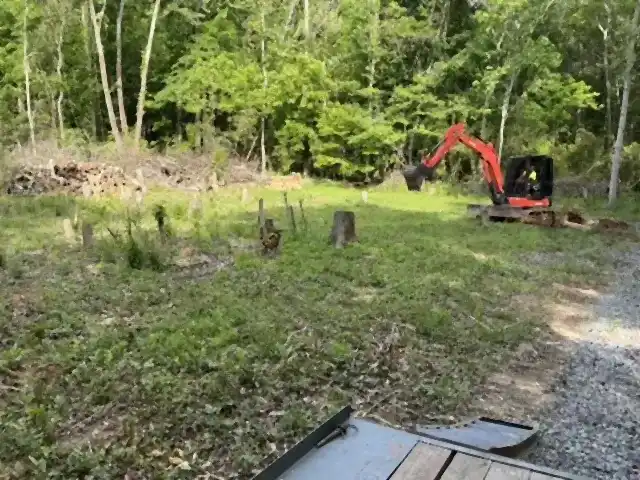
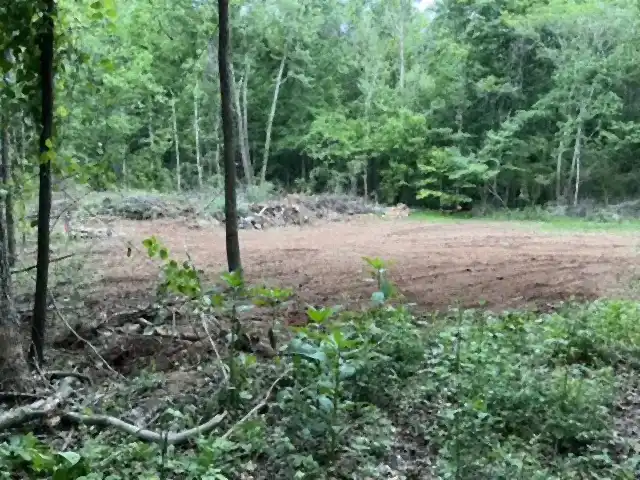
Brush and trees up to roughly 6–8 inches ground into mulch where they stand. Keeper trees flagged first.
Forestry mulching is the fastest way to take back overgrown ground without stripping it bare. R&G Land Clearing, an owner-operated land clearing and demolition company in Old Fort, TN, provides forestry mulching services with a mulching head: a rotating drum fitted with carbide teeth that grinds standing brush, saplings, and trees up to roughly 6 to 8 inches in diameter into mulch that stays on your property. No burn piles, no dump-truck loads, and no dozer blade scraping off your topsoil. Owner Ronald Gray meets you on the land, walks it with you, and runs the machine himself on most jobs, from Polk County pasture off US-411 to wooded lots around Cleveland, Chattanooga, and Chatsworth, GA. Estimates are free and done in person. Call or text Ronald at (706) 483-3851 to set up a walk-through.
Signs it’s time for forestry mulching
Brush doesn’t stand still. A fescue field left alone for a few seasons fills in with briars, sweetgum, and cedar seedlings; a few years later the saplings are too thick to bush-hog. Every season you wait adds diameter to the trees and hours to the machine time.
- Your bush hog can’t get through anymore; the saplings are too thick or too tall.
- Eastern red cedar, sweetgum, or pine seedlings are spreading across pasture or hayfield.
- Privet, honeysuckle, or briars have closed off the woods so you can’t walk through them.
- You can’t see or reach your fence line to repair it.
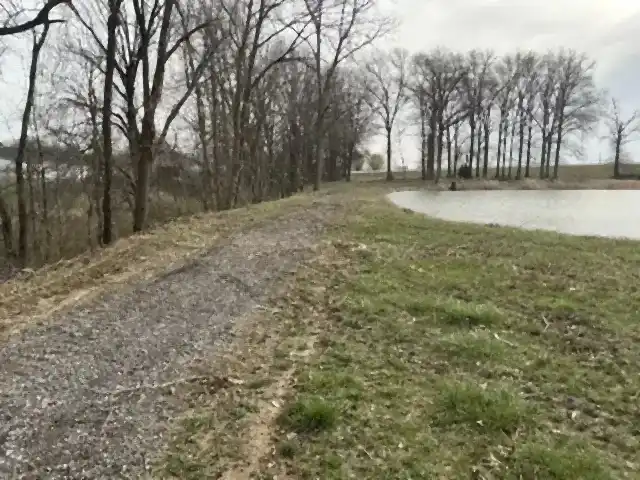
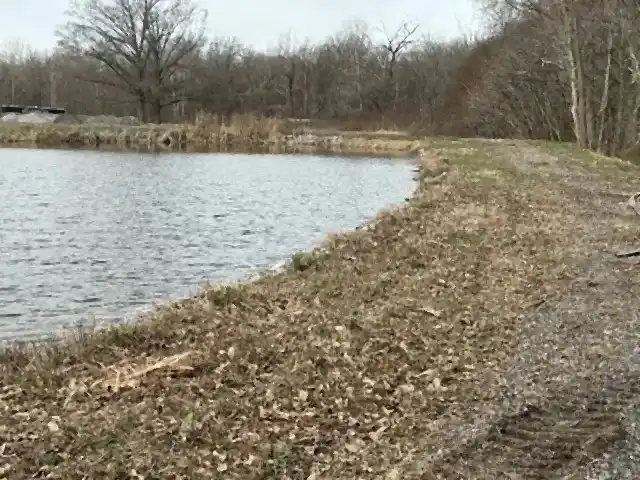
- Pond banks or ditch lines have grown over and are hard to mow.
- You want a view, trail, food plot, or shooting lane opened without clear-cutting.
- You’re getting ready to survey, list, sell, or build and need to see what the land actually looks like.
What our forestry mulching includes
Forestry mulching is single-pass clearing: one machine cuts, grinds, and spreads vegetation in place, so the ground underneath stays covered and intact.
Walk-through, with keeper trees flagged first
Before any equipment moves, Ronald walks the property with you. Shade trees, specimen oaks, and anything else you want to keep get flagged, along with property corners and fence lines, and you point out wells, septic fields, and private buried lines. Nothing gets mulched that you haven’t agreed to on the ground.
Brush and trees ground in place
The work is done with a forestry mulching head mounted on an excavator or skid steer. Its drum spins carbide teeth that chew through vines, briars, and saplings, which makes it just as useful for brush mulching and underbrush clearing under a stand of hardwoods as for opening a field. Trees up to roughly 6 to 8 inches in diameter are ground from the top down into chips. Stumps of mulched trees are ground off near ground level rather than pulled out, which is what keeps the soil and root mat in place.
Excavator reach for slopes, fence lines, and pond banks
Ronald’s Kubota excavator carries a cutting attachment on its arm. That reach lets him work down a ditch bank, along a pond edge, or tight to a fence line while the tracks stay on stable ground, which matters on the steep ground common through Polk and Bradley counties.
Mulch left as ground cover, property left finished
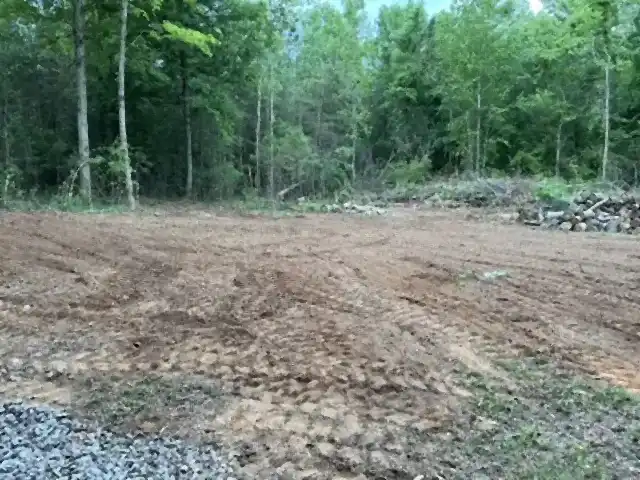
The ground material stays as a mulch layer that slows runoff and breaks down into the soil. There’s nothing to haul and nothing to burn. Before leaving, Ronald takes extra time to spread out heavy mulch piles and clean up the edges, so the property looks finished, not just cleared. You don’t need to be home while the machine runs once the flagged plan is set.
The overgrowth we see most on Old Fort-area land
Cedar and sweetgum taking back pasture. Old hayfields and pasture in Polk and Bradley counties revert to eastern red cedar and sweetgum fast. Cedar is an ideal mulching target because it doesn’t resprout from a stump cut below its lowest green branches. Sweetgum and most hardwoods do resprout and need a follow-up mowing.
Privet and honeysuckle closing off the woods. Chinese privet and Amur honeysuckle are both on the Tennessee Division of Forestry’s list of invasive plants, and both form a wall under the canopy that you can’t walk through. Mulching opens the understory, but both resprout from the roots, so plan a follow-up pass or herbicide treatment next season.
Red clay that washes when it’s stripped bare. Clay ground here erodes quickly once the cover is gone. Bulldozing pushes topsoil into windrows and leaves the ground raw; mulching leaves the root mat in place and adds a protective layer on top. When you do need bare dirt for a house pad or driveway, that’s full land clearing.
Old structures hidden in the brush. Overgrown tracts often hide a collapsed shed, old trailer, or outbuilding. Once mulching opens the ground, R&G’s residential demolition service can tear it down and haul it off.
Google reviews
What Old Fort-area landowners say about our clearing work
Read more reviews on our Google Business Profile: 5.0 stars.
Everything was cleared exactly how I wanted, sooner than originally scheduled and at a very reasonable price. I definitely plan to use R&G again
Ronnie and Glenda came down to Illinois to do a land clearing job & demolition job for me also they cleared a couple acres of invasive honey suckle brush. Ronnie was meticulous and conscience about everything. He was a superior equipment operator. I really liked that he made sure I was happy with the job. Also he had to use a chain saw in a lot areas and removed a lot of brush by hand. Would definitely recommend them was very pleased with them.
I called them to clear a spot for my tiny home! They did a great job and have great prices! They also do a good job cleaning up after the job is done. Call them they are amazing company and very down to earth people and great at what they do!
Why R&G
Why Old Fort landowners choose R&G Land Clearing
Plenty of outfits own a mulcher. Here’s what’s different about working with this forestry mulching company.
Owner-operated by Ronald Gray
Ronald is the person who walks your property and, on most jobs, the one in the seat. On larger projects he brings in a partner operator he’s worked with for years so the schedule doesn’t slip, and his wife Glenda handles the office side, so you always know who you’re talking to.
Keeper trees flagged first
Every tree, fence, and feature you want saved is flagged during the walk-through, before a machine starts. The plan you agreed to on the ground is the plan that gets mulched.
Finished, not just cleared
Ronald’s standard is to leave the property looking finished: heavy mulch spread out, edges cleaned up, and the lines you asked for left clean. It’s why customers describe their land as cleared “exactly how I wanted.”
10% off veterans, first responders, seniors
Active military, veterans, law enforcement, first responders, and senior citizens get 10% off. Mention it when you call.
R&G Land Clearing LLC has been a BBB-accredited business since July 2025, rated A, and holds Tennessee license #12580 through the Department of Commerce & Insurance (look it up on Verify.TN.gov). The company opened in January 2025 and has run full-time since summer 2025. Learn more about Ronald, Glenda, and how we work.
How it works
How our forestry mulching works
5 steps, and you only make the first call. Ronald handles the rest.
Walk the property with Ronald
Call or text, and Ronald sets a time to meet you on the land. You walk it together: what stays, what goes, and how you want the ground to look when it’s done. You get a written quote, typically within a week. The visit is free, and there’s no obligation.
Flag keepers, lines, and buried hazards
Before mulching day, keeper trees, property corners, and fence lines are flagged, and you point out wells, septic fields, and private buried lines. If the job includes stump grubbing or any digging, R&G files a Tennessee 811 locate request at least three working days ahead (Georgia 811 on Georgia jobs) so public utility lines are marked.
Open access, set the edges, then clear the interior
The machine opens an access lane first, then works the boundaries and fence lines so the edges of the job are set before it clears the interior. The mulching head grinds from the top of the brush down, leaving chips on the ground as it goes. A residential property of a few acres with moderate brush usually takes one to three days.
Handle what the mulcher shouldn’t
Trees over roughly 8 inches, heavy downed timber, trash, and old wire fencing are set aside or handled separately, as spelled out in your quote. Any stump removal or hauling you added happens now, once the ground is open.
Final walkthrough and sign-off
Ronald walks the finished ground with you, checks every flagged tree and line, and touches up anything you point out before the machine leaves. You’re left with open, mulch-covered ground, your keeper trees standing, and an itemized invoice.
How much does forestry mulching cost in Old Fort, TN?
Every forestry mulching job is priced after Ronald walks the property, because two five-acre tracts can take very different machine time depending on acreage, terrain, vegetation density, and project scope. You get a written quote before any work starts.
What changes the price
- Density: scattered saplings versus a solid wall of privet or cedar
- Tree size: trees near the 6 to 8 inch limit take more passes than brush
- Acreage and layout, including how many feet of fence line are involved
- Slope and terrain: steep banks, rock, and wet bottoms slow the machine
- Selective work: how many keeper trees the machine has to work around
- Distance and access from Old Fort
Quoted separately
- Stump grubbing and clearing to bare dirt for building pads — land clearing
- Tearing down old sheds, trailers, or outbuildings — residential demolition
- Hauling oversized trees, trash, or old fencing off-site
- Grading and site prep
Active military, veterans, law enforcement, first responders, and seniors get 10% off.
Often paired with forestry mulching
Land clearing
Mulching opens the ground; building on it takes more. When a mulched area is headed for a house pad, driveway, or tiny-home site, stumps get grubbed out and the ground is cleared to bare dirt. A residential lot of a few acres usually takes one to three days. See how residential land clearing gets a lot ready to build
Demolition
Clearing brush often uncovers an old trailer, collapsed shed, or barn nobody has looked at in years. R&G handles the teardown, coordinates utility disconnects, and hauls the debris. Get an old trailer or outbuilding torn down and hauled off
Fence line & pond mowing
Keeping a field open costs far less than clearing it again. The excavator’s mowing attachment knocks back resprouts along fence lines and pond banks before they become saplings again: simple, ongoing vegetation management. Keep your fence lines and pond banks mowed.
Service area
Forestry mulching across Southeast Tennessee and North Georgia
R&G Land Clearing is based in Old Fort, in southeastern Polk County where US-411 meets Ladd Springs Road (SR-313), and works within about 100 miles: from the Knoxville and Alcoa area south into North Georgia, outside the Atlanta metro. Most jobs land in Polk, Bradley, and Hamilton counties in Tennessee and Murray, Whitfield, and Catoosa counties in Georgia.
Ladd Springs Road runs west to SR-74 just southeast of Cleveland, TN, so Bradley County land is a short haul. From Cleveland, I-75 carries the machine to Chattanooga, TN and south to Ringgold, GA. Heading south on US-411 through Eton leads to Chatsworth, GA in Murray County. Searching for forestry mulching contractors in Cleveland or Chatsworth? That’s home ground for R&G.
Most mulching work here is old pasture going back to cedar and sweetgum, or hillside woods thick with privet, on slopes and clay that wash when stripped. Mulching, which leaves cover on the ground, is usually a better fit than dozing.
Explore all of our land clearing and demolition services or every area we serve.
Want a walk-through in your area? Call or text Ronald at (706) 483-3851.
- Old Fort, TN
- Cleveland, TN
- Chattanooga, TN
- Benton, TN
- Knoxville / Maryville / Alcoa, TN
- Chatsworth, GA
- Ringgold, GA
Quick answers
Frequently asked questions
Didn't find your question? Call or text Ronald at (706) 483-3851, or see all FAQs.
How much does forestry mulching cost?
Forestry mulching cost depends on acreage, terrain, vegetation density, tree size, and slope, so every job is priced after a free walk-through. Pricing is affected by how thick the vegetation is, how steep the ground runs, and how many acres need to be cleared. The best way to get an accurate price is a free on-site estimate where Ronald can assess your specific property. Veterans, first responders, and seniors get 10% off.
How long does forestry mulching take?
A residential property of a few acres with moderate brush usually takes one to three days. Heavy cedar or privet, steep ground, or more acreage adds time. Ronald will tell you how many days to expect when he gives you the quote.
What's the difference between forestry mulching and land clearing?
Land clearing removes everything down to bare ground, including stumps, and is what you need before building. Forestry mulching grinds brush and trees into mulch that stays on the ground, which controls erosion, skips hauling costs, and works well for opening pasture or wooded lots without stripping them bare. Many properties get both: mulching over most of the acreage and full clearing where a house pad or driveway will go.
How big a tree can a forestry mulcher handle?
R&G’s mulching head handles trees up to roughly 6 to 8 inches in diameter, plus all the brush, briars, vines, and saplings below that. Larger trees are either left as keepers or handled separately, and your quote spells out which. If you’re not sure how big your trees are, Ronald will size them up on the walk-through.
Will the brush grow back after mulching?
Some of it will. Eastern red cedar doesn’t resprout once it’s cut below its lowest green branches, so cedar-choked fields stay open. Privet, honeysuckle, sweetgum, and most hardwoods come back from the roots, so plan on a follow-up mowing or herbicide treatment the next growing season. The mulch layer itself helps by shading out many new seedlings.
Do I need a permit for forestry mulching?
Most residential land clearing on private property in Polk County doesn’t need a county permit on its own. Mulching also avoids burning entirely, which matters because Tennessee requires a Division of Forestry burn permit for debris burning from October 15 through May 15. If any digging is involved, R&G files a Tennessee 811 locate request first.
Services
Often paired on the same property
One owner-operated crew for clearing, demolition and pool removal, so a property that needs more than one gets one plan and one estimate.

Let's take a look at your property.
Tell Ronald what you want done. He'll come walk it with you, free and with no obligation.
10% off for military, veterans, law enforcement, first responders and seniors